























Swirl-Air™ Technology
Finely Atomized Spray at Low Pressures
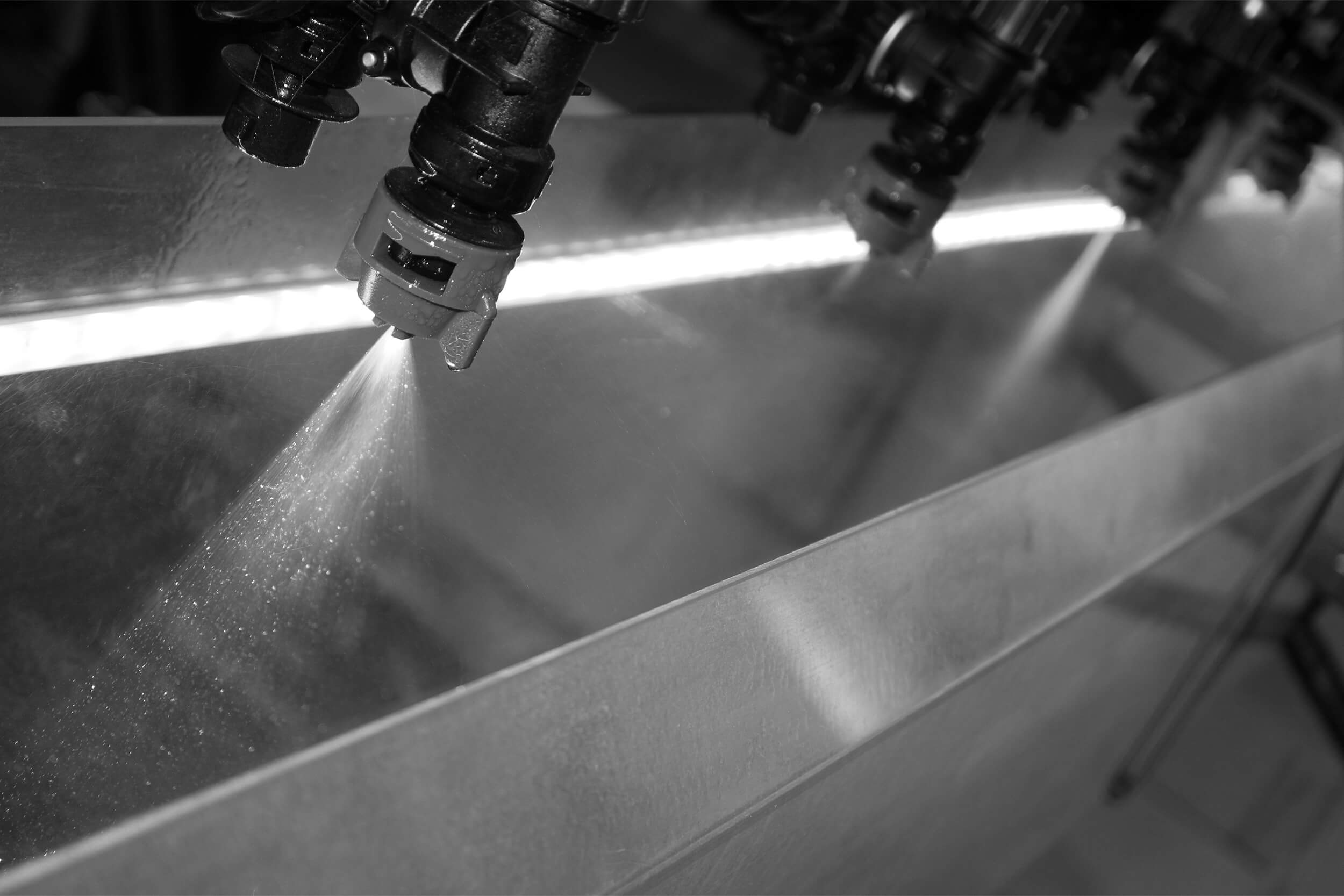
The Delavan Swirl-Air™ range of spray nozzles, based on aerospace technology and developed within our Gas Turbine Division, was designed to maximize hydraulic and pneumatic energy to atomize liquids at relatively low pressures. Originally designed for use in evaporative cooling, spray drying, and combustion, they have since been used in many other industrial applications from food to steel production. Different spray angles are available. Flow rates can be changed by adjusting air and liquid pressure and the degree of atomization controlled by changes in the air-to-liquid volume ratio.
Construction & Materials
Swirl-Air™ nozzles have a two piece construction; the nozzle body, plus an integral deflector ring and cap that is easily removable without disturbing pipe connections. There are no external struts or supports to interfere with spray patterns. Standard configurations are available in 316L Stainless Steel and 440 Stainless Steel. Other materials such as Hastelloy C276 and Inconel 600 are also available.
- Large fluid passages to easily accommodate coarse particles
- No external struts to interfere with the spray pattern
- Variations in spray angle via interchangeable nozzle caps – produces wider spray patterns than most two-fluid atomizers
- Nozzle design provides vortex mixing, primary impingement, fluid distribution, and external impact for fine atomization
- Air consumption and power requirements are relatively low, permitting specification of smaller air compressors
- Good atomization over wide range of turn-down ratios
- Droplet size control provided by applying only minor changes in air/liquid pressure
Applications
- Gas Cooling/Conditioning
- Humidification
- Coating Applications
- Furnace Temperature Control
- Spray Drying
- Waste Acid Incinerator Sprays
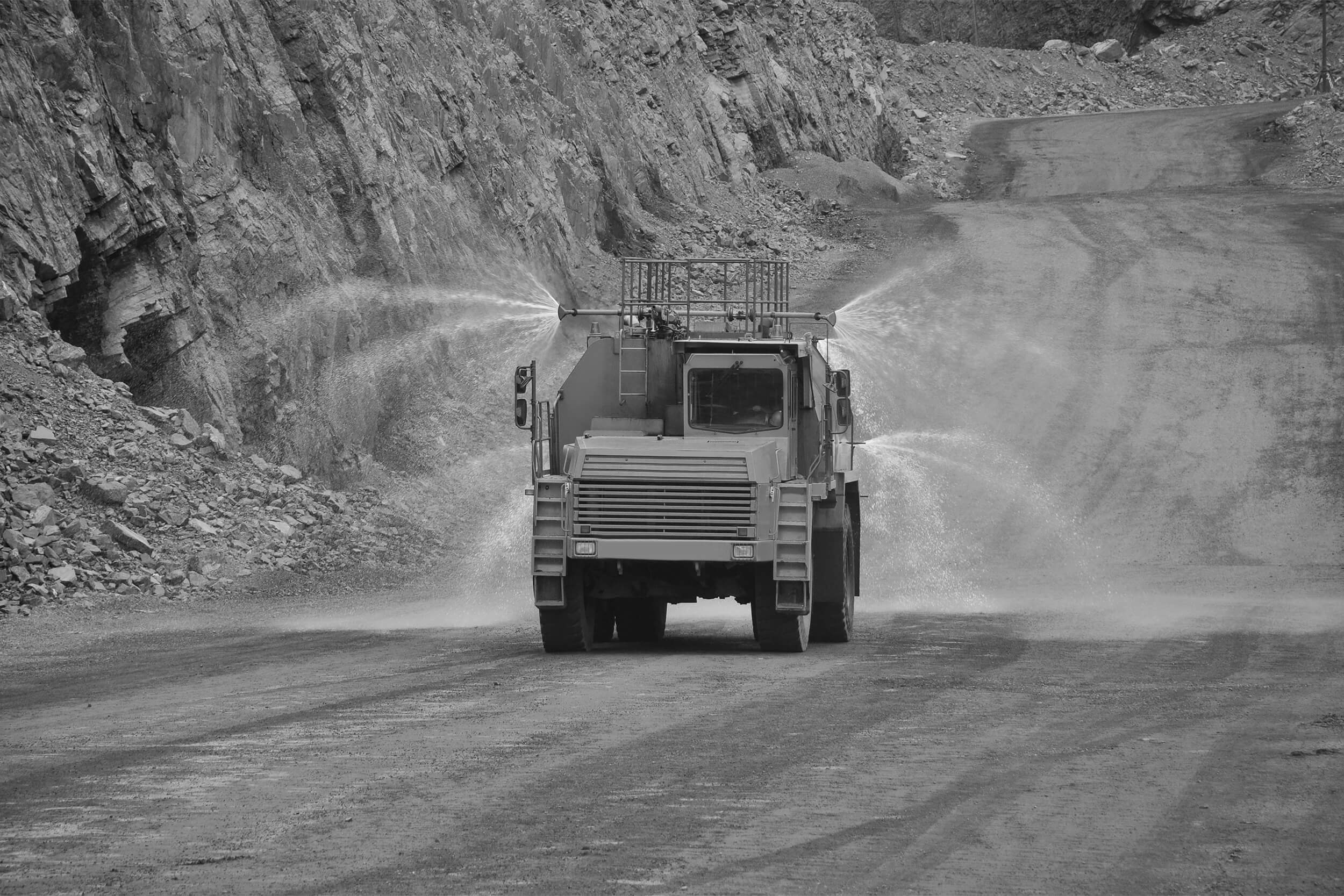
- Dust Suppression
- Odor Control
- Spray Sanitation/Fumigation of Food Production Areas
- Special Effects (e.g. Fog Production on Film Sets)
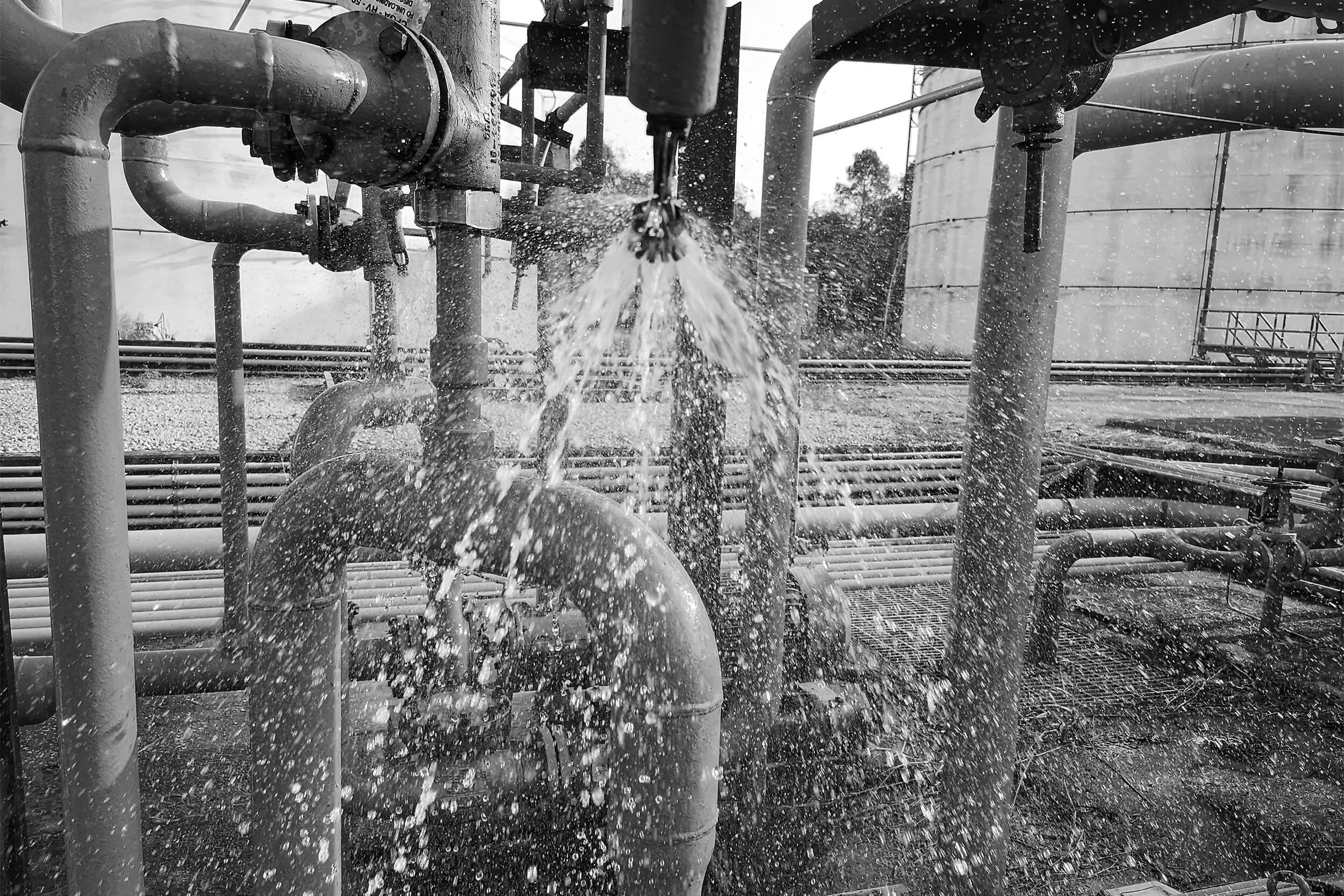
- Low Volume/High Pressure, Fine Atomization for Fire Protection Systems
- Fume Scrubbing
-
Steam Desuperheating
-
Mold Cooling
-
Oven Humidity
-
Control SNCR Sprays
The Swirl-Air™ Technology
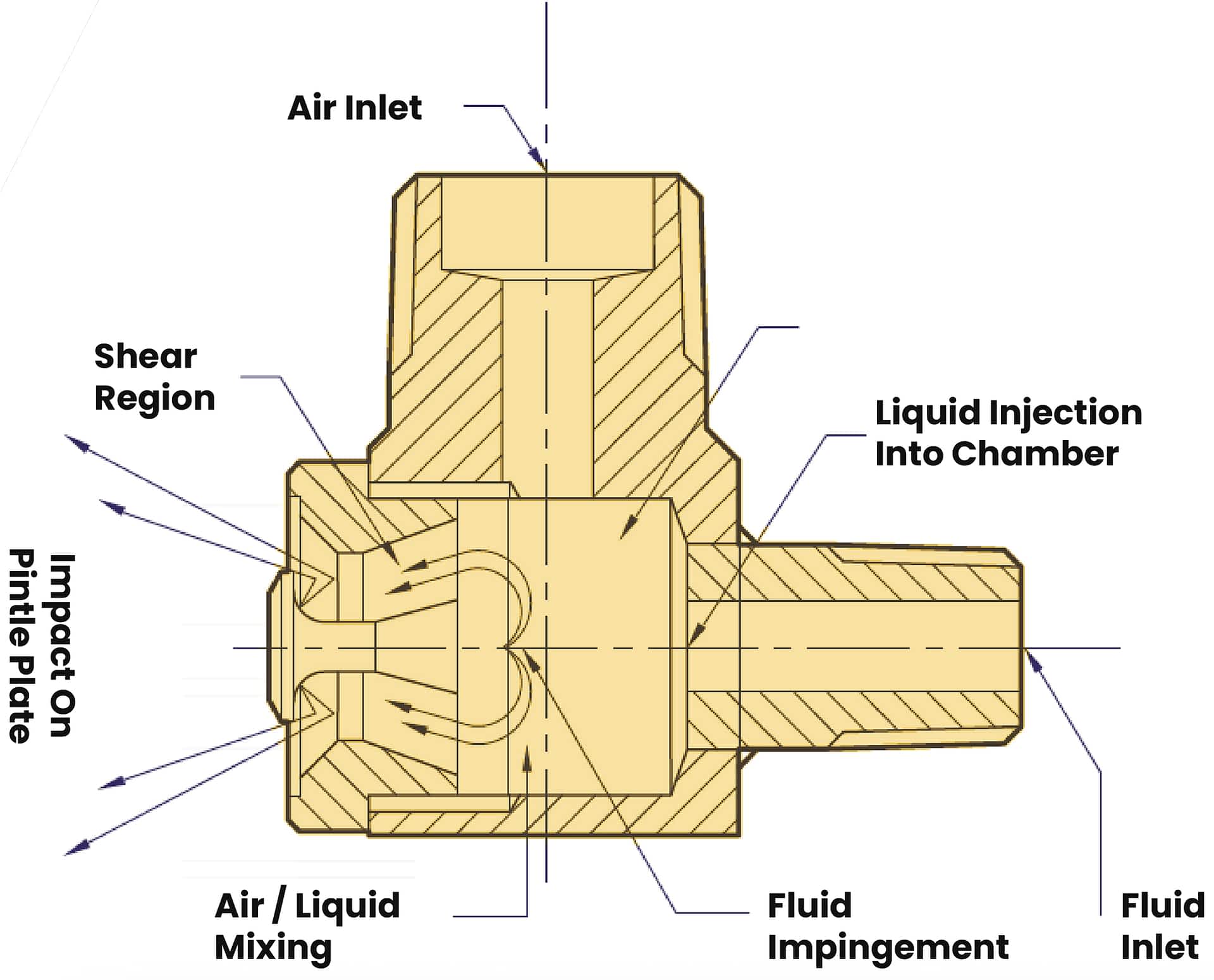
Liquid enters the nozzle axially, coming in contact with a tangentially introduced stream of air/gas or steam in the nozzle mixing chamber. The liquid impinges on the pintle plate and the interaction of gas and liquid creates extreme turbulence in the chamber. The swirling liquid, seeking an exit, impinges against the walls and distributor plate and then flows through the venturi-shaped orifice, where the droplets are exposed to extreme shear forces before impinging against a circular deflector ring, which serves a dual purpose: close control of spray angle and break up of the spray into even finer droplets (secondary atomization).
The deflector ring is held in position by a cone projecting from the distributor plate. This method eliminates struts that could interfere with the spray pattern. The progressive application of shear and inertial forces within the nozzle provide for a relatively high efficiency.
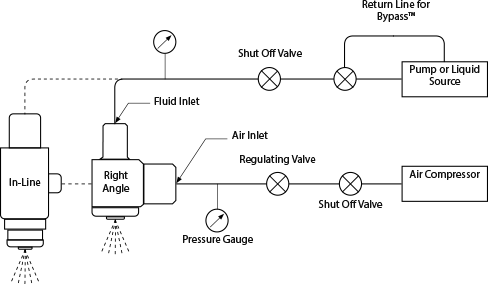
Typical Nozzle Installations
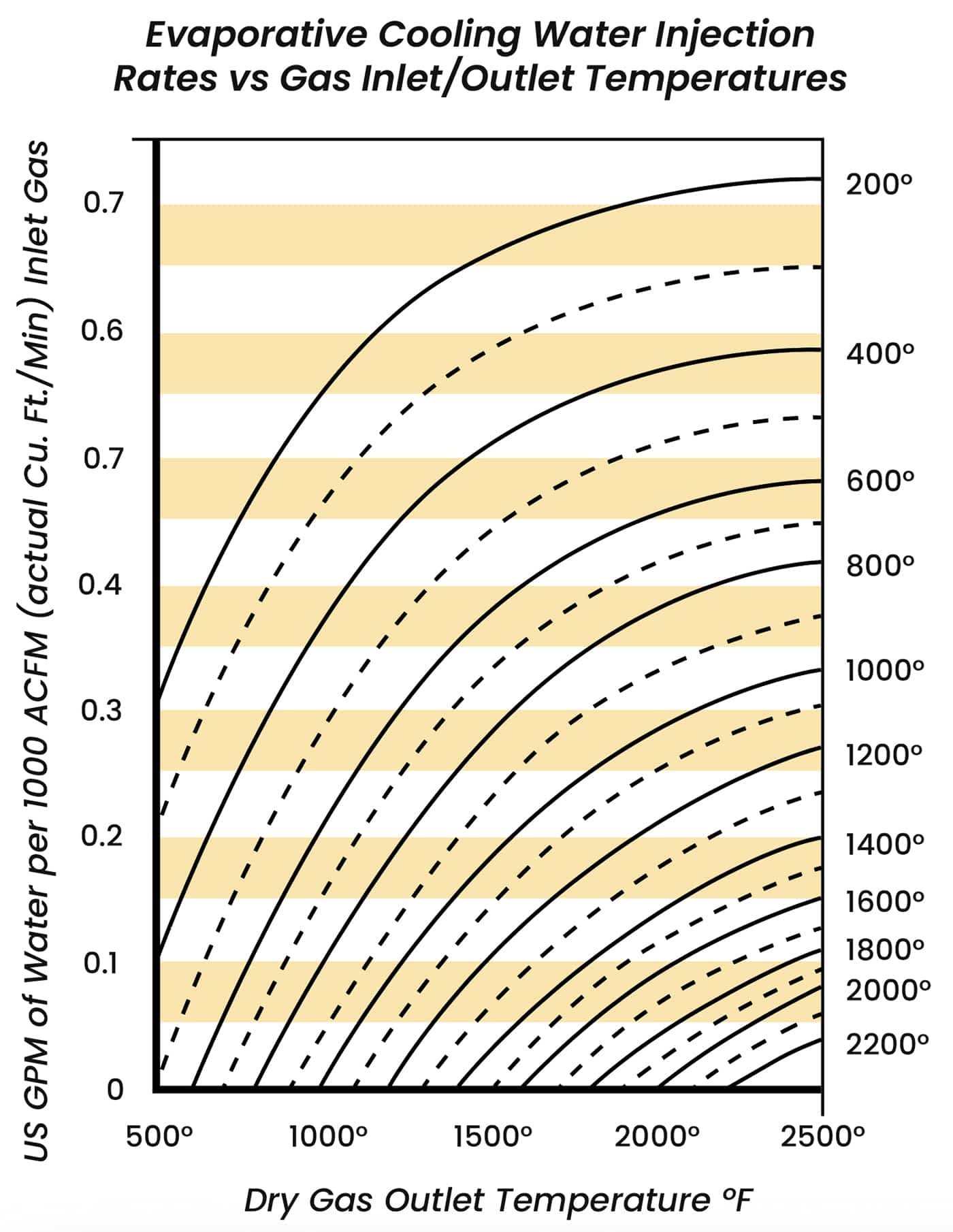
Example: 1700ºF dry inlet gas to be cooled to 800ºF outlet temperature requires 0.32 US GPM water injection per 1000 CFM of inlet gas
Spray Characteristics
Eight sizes of nozzle are available, covering flow rates from 1-2400 GPH. Nominal spray angles of 50°, 75°, and 100° can be attained by the specification of interchangeable nozzle caps. Contact the factory for special spray angles from 25° up to 160°.
The nozzle has demonstrated the capability of achieving mean droplet diameters in the 50-100 micron range at low air pressures and flows. When using dry steam instead of air, the steam pressure should be approximately four times greater than air pressure to achieve the same spray characteristics. Comparable atomization in a hydraulic nozzle would usually require very high pressures. Degree of atomization is also variable by controlling the volume ratio of air to liquid.
Droplet size may be affected by minor changes in air pressure. However, if air pressure is set initially and it is necessary to modulate the liquid flow, the air differential pressure and flow rate will automatically respond in such a way that the quality of atomization remains nearly constant. In some applications, this can result in a saving through the elimination of air valving and controls.
Multiple Configurations
Two installation configurations are available. In the right angle nozzle, atomizing air enters the side and the liquid enters axially in the back. With the in-line nozzle, concentric piping is used with the liquid in the center and atomizing air entering around the outside. Concentric pipe adapter assemblies are optional and are not included with the nozzle assembly as standard. Our specialist design team can also provide customized designs for your own applications.
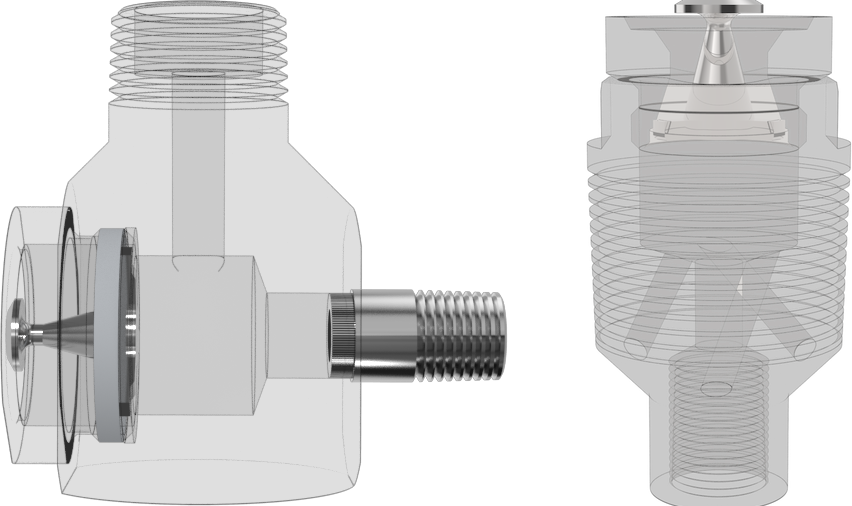
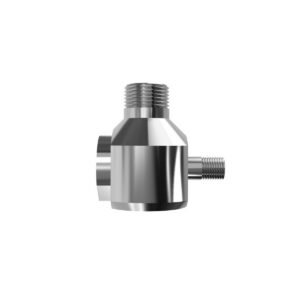
Swirl-Air™ Right Angle Air Atomizing Nozzle produces a hollow cone spray pattern with flow rates from 0.2 to 40 GPM and spray angles from 30° to 120°, providing fine atomization for a wide range of industrial applications.
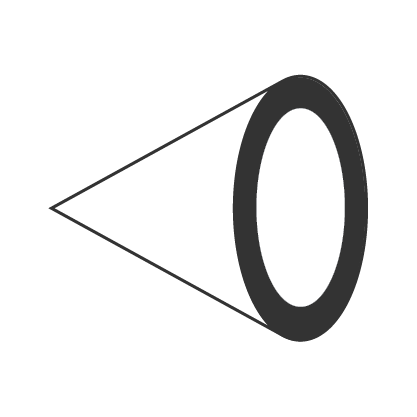 Hollow Cone
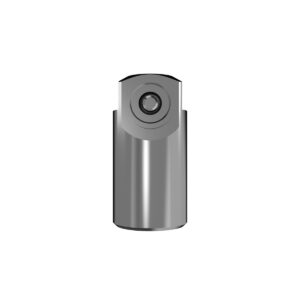
Swirl-Air™ Concentric Right Angled Inlet Air Atomizing Nozzle produces a hollow cone spray pattern with flow rates from 0.2 to 40 GPM and spray angles from 30° to 120°, providing fine atomization in applications requiring a compact concentric inlet design.
Hollow Cone
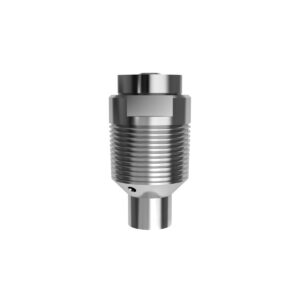
Swirl-Air™ Concentric Inline Air Atomizing Nozzle produces a hollow cone spray pattern with flow rates from 0.2 to 40 GPM and spray angles from 30° to 120°, providing fine atomization for a wide range of industrial applications.
Hollow Cone
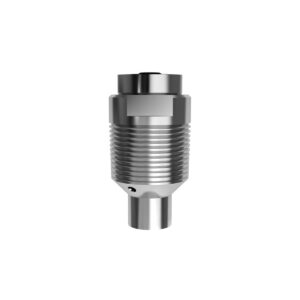
Swirl-Air™ Carbide Lined Inline Air Atomizing Nozzle produces a hollow cone spray pattern with flow rates from 0.2 to 40 GPM and spray angles from 30° to 120°, providing fine atomization and exceptional wear resistance for demanding industrial applications.
Hollow Cone
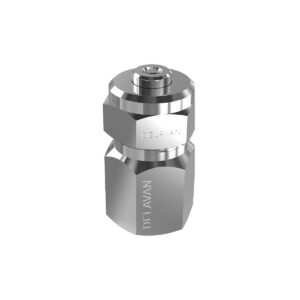
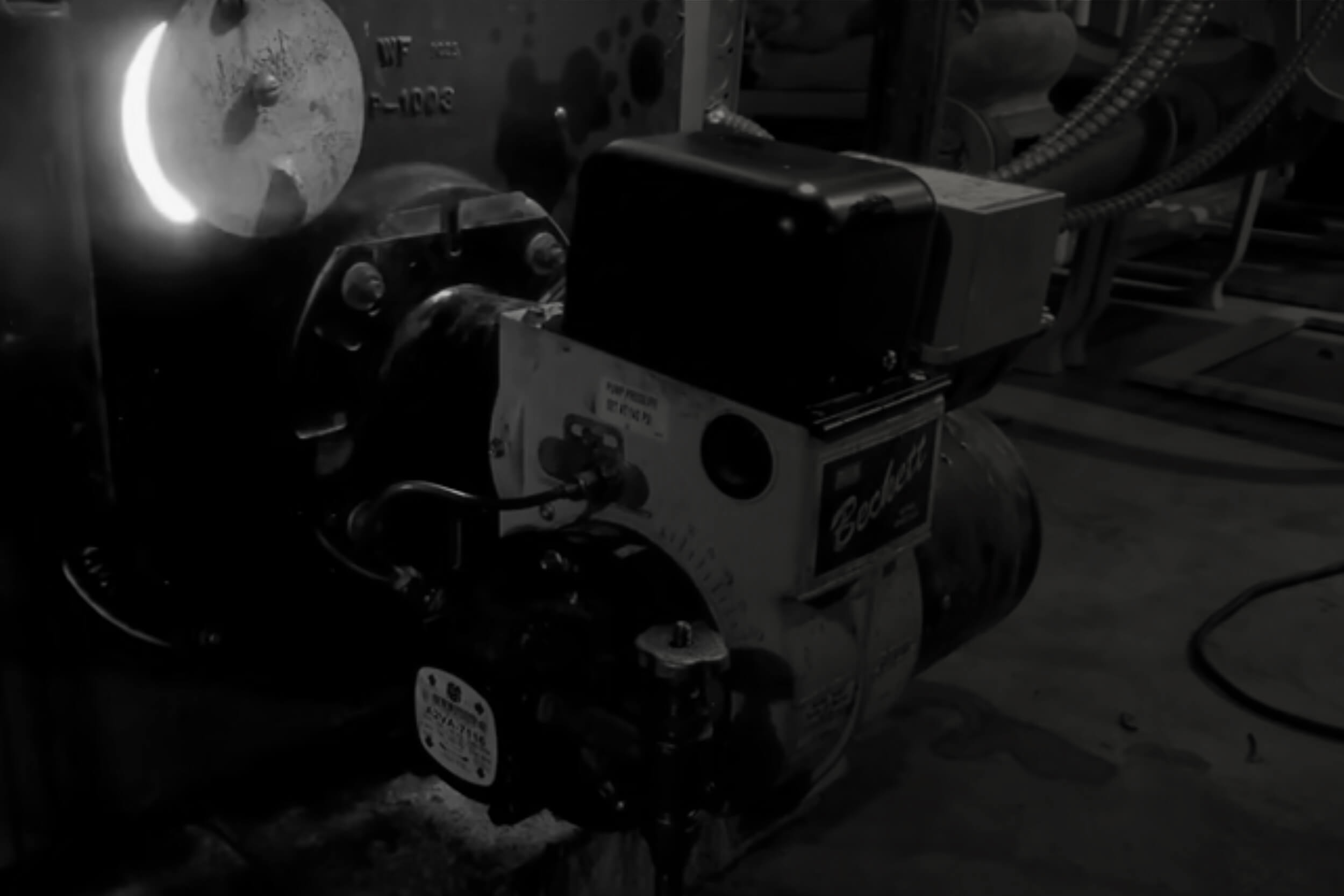
Swirl-Air™ Combustion Air Atomizing Nozzle uses a two-fluid atomization design to produce finely atomized sprays for combustion applications, with variable spray angles and capacities to suit a wide range of fuels.
Hollow Cone
Latest News
Keep up to date with the latest news from partners, events, our company and the wider industry.
Request a Consultation
Have questions about our spray-nozzles or fluid handling systems? Looking for help on a unique application? Need help with a budget estimate to determine overall equipment costs? Please don’t hesitate to reach out — we’d love to help.