
















Delavan SDX® Nozzles Set the Standard for Spray Drying Performance & Durability.
The Delavan SDX® range of spray drying nozzles set the standard by which other nozzles are judged. Each of the five nozzles in the SDX® range is built on Delavan’s unique single inlet spiral swirl chamber design and highly polished orifice disc. Delavan was the first to hold a patent on the revolutionary design which not only minimizes plugging and maximizes particle uniformity but also produces a wider range of flow rates and spray angles. This means the nozzle can be ‘Fine Tuned’ to almost any dryer or application. This design has improved dry product quality because the spiral configuration conforms to the natural path of liquid as it progresses toward the orifice.
The Delavan SDX® Nozzle Advatange
With 13 sizes of swirl chamber and over 220 orifice sizes, the ability to fine tune the flow rate and spray angle is almost limitless. The SDX® offers flow rates from 6 – 1400 gph @ 1000 psi (69 bar) and carry a proven pressure rating to 10,000 psi (690 bar) without the need for expensive back up rings.
Delavan® is continually evaluating the critical design features of the various models of nozzle that comprise the SDX® range. This engineering work, combined with feedback from thousands of users around the world, generates opportunities to improve the performance of the product as well as lowering the cost of ownership and simplifying maintenance.
Delavan® originally developed many more of the technologies that make the SDX® the standard in dry spraying, including:
- The hand tighten assembly with the SDX® III
- The retaining feature with the SDX® and then simplified with the SDX® V
- The use of sealing surfaces into carbide components with the Compact SDX®
The Delavan SDX® Nozzle Line-Up
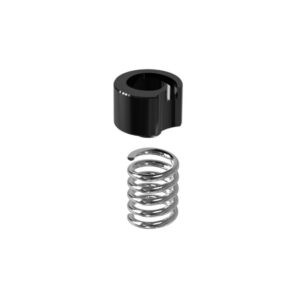
SDX® Check Valve helps prevent liquid after-drip from SDX® Spray Drying Nozzles after system shut-off, supporting cleaner operation and consistent spray drying performance.
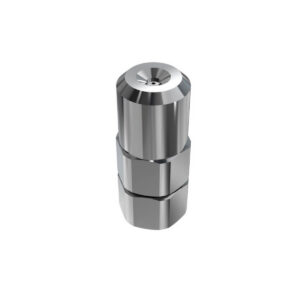
SDX® III Spray Drying Nozzle features a hollow cone spray pattern with uniform particle size distribution, fine atomization, and reduced operating pressure requirements for spray drying applications.
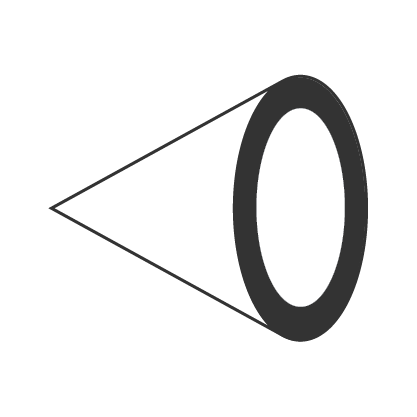 Hollow Cone
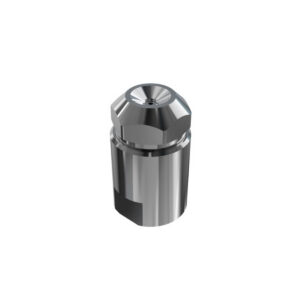
SDX® Spray Drying Nozzle features a hollow cone spray pattern with uniform particle size distribution, fine atomization, and reduced operating pressure requirements for spray drying applications.
Hollow Cone
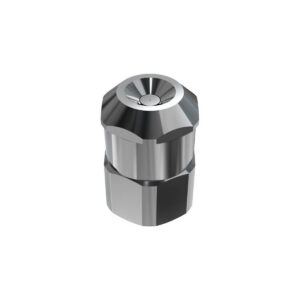
SDX® V Spray Drying Nozzle features a hollow cone spray pattern with spray angles from 20° to 100°, providing flexible atomization performance and efficient maintenance for demanding spray drying applications.
Hollow Cone
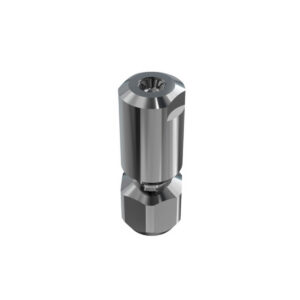
Mini SDX® Spray Drying Nozzle features a hollow cone spray pattern with flow rates from 24 to 208 L/h and nominal spray angles from 70° to 75°, providing fine atomization at lower operating pressures.
Hollow Cone
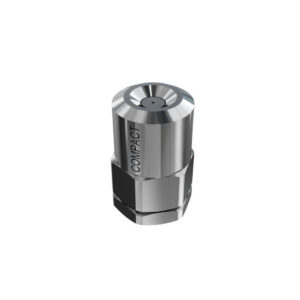
Compact SDX® Spray Drying Nozzle features a hollow cone spray pattern with spray angles from 68° to 83°, providing a higher flow range in a compact design for pilot and small-production spray drying applications.
Hollow Cone
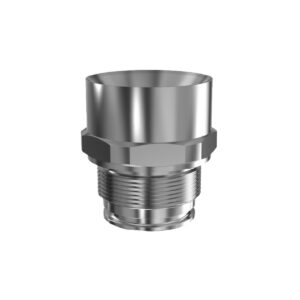
SDX® Cone Faced Body is designed to help prevent product build-up on the front face of the nozzle body, supporting cleaner operation in spray drying applications.
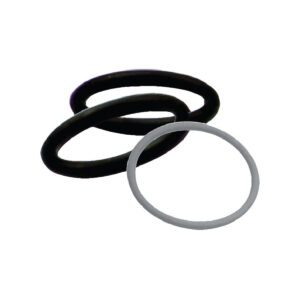
SDX® Seal Kit provides replacement O-rings for SDX® Spray Drying Nozzles, supporting reliable sealing across a wide range of operating temperatures and process conditions.
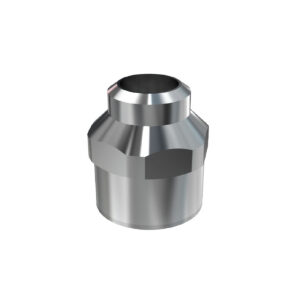
SDX® Butt Weld Adaptor provides a secure connection for integrating spray equipment into process piping, with a range of standard pipe sizes, configurations, and lengths available.
SDX® Nozzle Performance & Spray Quality
The Atomizer
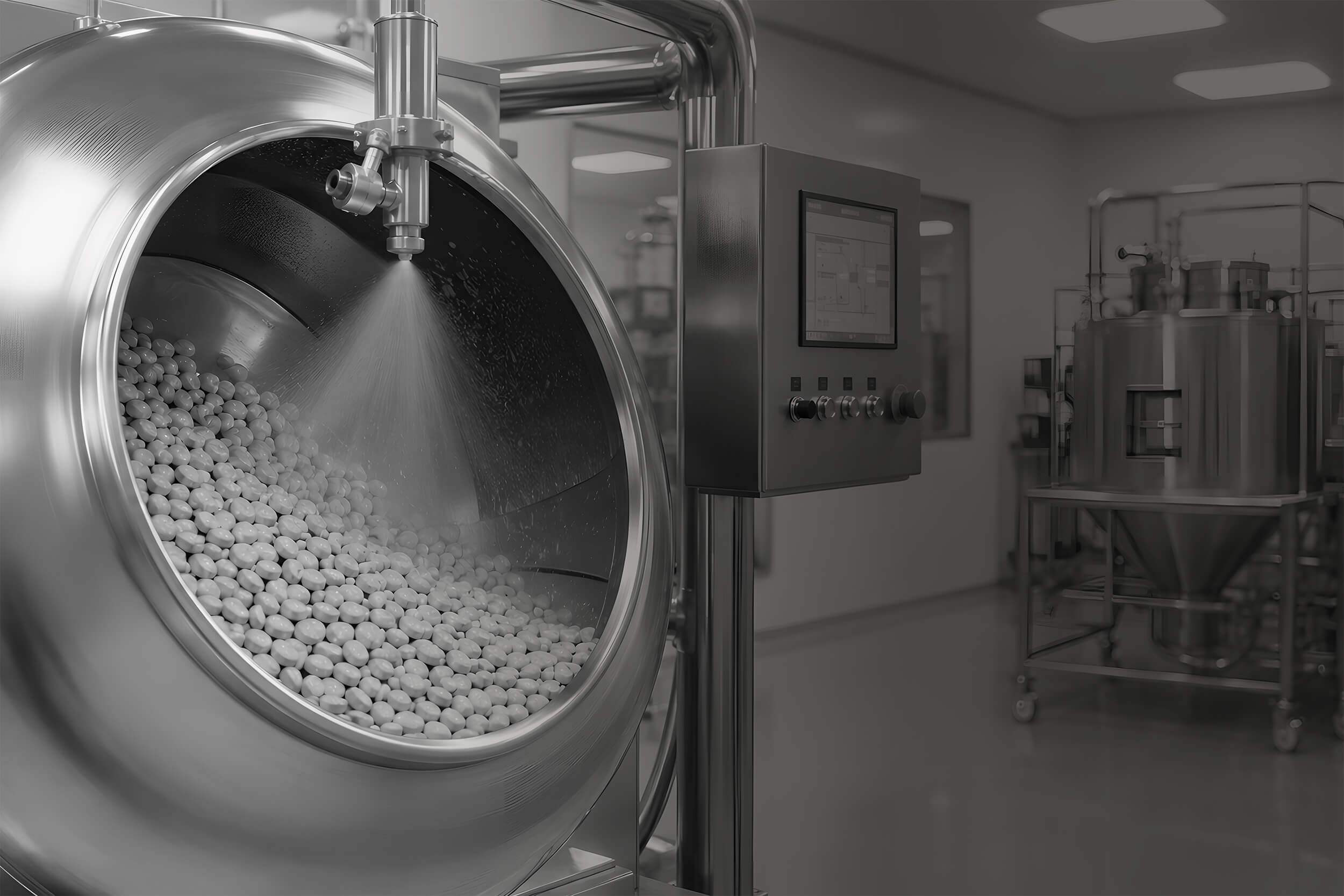
Installing the right atomizer is an essential step to ensuring spray drying success. The atomizer must fulfill several important functions:
- It must disperse the feed material into small droplets, which should be well distributed within the dryer and mixed thoroughly with the hot gas.
- The size of the droplets produced must be compatible with the required product particle size characteristics.
- The droplets produced must not be so large that they are incompletely dried, nor so small that product recovery is difficult – small particles may also overheat and become scorched.
- The atomizer must act as a metering device, controlling the flow rate at which the material is fed into the spray dryer.
Centrifugal Pressure Nozzles
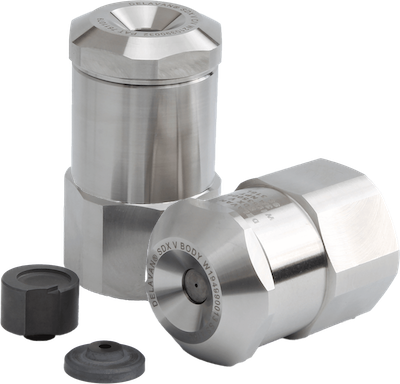
The SDX® represents Delavan’s range of centrifugal spray drying nozzles. Energy for atomization is supplied solely by the feed liquid pressure with pressures up to 700 Bar. The SDX® range uses a single inlet swirl chamber and can atomize liquids with viscosities up to several hundred centipoise. All the SDX® nozzles use orifice discs, thereby guaranteeing uniformity of performance across the range.
Two-Fluid Nozzles
In two-fluid nozzles, gas (or steam) supplies most of the energy required to atomize the liquid. Liquid admitted under low pressure may be mixed either internally or externally with the gas. Although energy requirements for this atomizer are generally greater than the spinning discs or pressure nozzles, the two-fluid nozzle can produce very fine atomization, particularly with viscous materials. It is often used in laboratory and small spray dryers.
Liquid Properties
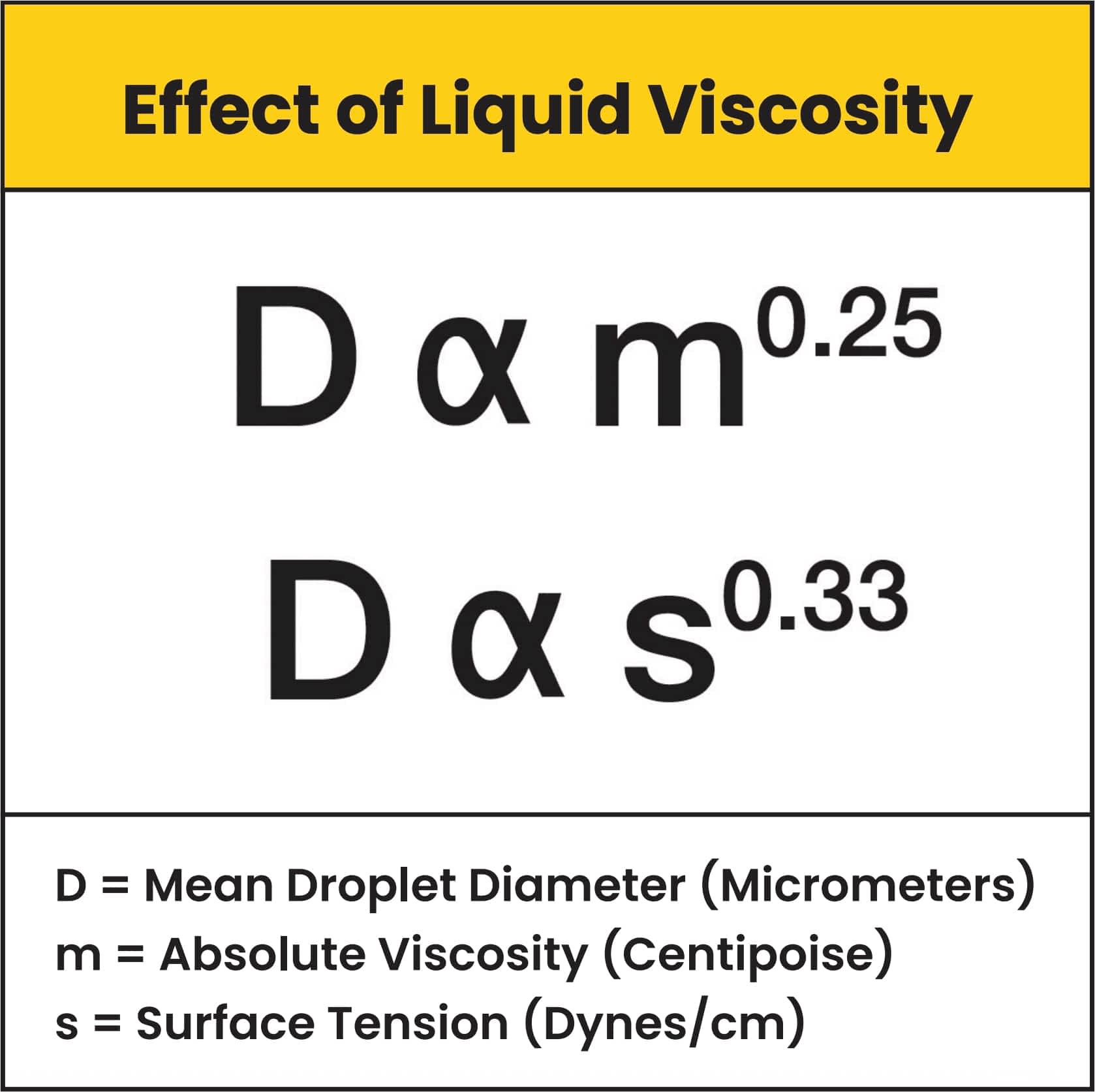
The properties of the feed stock are directly related to the finished particle size. Therefore density, viscosity, percentage solids, abrasive awareness, and any other characteristics all need to be considered. The liquid properties should be established at the temperature corresponding to the liquid in the nozzle. Feed stocks are often sprayed at elevated temperatures to decrease viscosity, thereby improving atomization.
The effect of each liquid property on droplet size is usually established by actual test. However, Delavan’s field experience shows that these effects can be closely estimated from the following correction factors.
Spray Quality and Particle Size
While durability is one of the foremost requirements of pressure nozzles, atomization quality and droplet size are just as critical. Droplet size affects not only dryer size and operating efficiency but also the characteristics of the final product. Particle size is critical with regard to bulk density, solubility, and customer acceptance. Distinguishing between droplet size and particle size is important, since the two are generally not identical, although the relationship between the two can often be determined by on-site trials. Particle size or droplet size is usually expressed in terms of a mean or average diameter as well as the range in size.
Droplet Diameters
Delavan® uses the Sauter mean diameter, whose ratio of volume to surface area is equal to that of the aggregate spray, to measure the droplet diameter. Typically, a spray drying nozzle will produce droplets as small as 1-2 micron and as large as 400-500 micron. However, the majority will be within a range of 50-200 micron. The narrower the range of droplet size, the more suited it is to spray drying, with a ‘mono-range’ being the ultimate goal for most operators.
Spray Angle
The spray angle in spray drying is usually in the 60° to 90° band. However, the spray angle measured near the orifice may not prevail further away, particularly at high pressures, when the angle becomes narrower within a short distance.
Flow Variation
SDX® nozzles can also act as metering devices, controlling the distribution of feed into the chamber. Whether a single or multi-nozzle application, the flow rate must be precisely controlled to be compatible with the dryer design. Therefore, it is important to understand the properties of the feed material.
Wear Resistance
The wear life of the internal parts (consumable parts) depends on their corrosion- and erosion-resistant characteristics. Corrosion occurs when the liquid feed and wear parts are chemically incompatible. Corrosion problems can be avoided if the chemical properties of the feed stock are known and the material of the consumable parts are designed to be compatible. Erosion results from the liquid feed’s abrasive solids physically removing the material. Erosion can be combated using harder materials but never fully overcome.
Latest News
Keep up to date with the latest news from partners, events, our company and the wider industry.
Request a Consultation
Have questions about our spray-nozzles or fluid handling systems? Looking for help on a unique application? Need help with a budget estimate to determine overall equipment costs? Please don’t hesitate to reach out — we’d love to help.